


휴먼에노스 블로그

혈압을 이야기할 때는 “얼마나 낮출 것인가”보다 “왜 올라갔는가”를 먼저 이해하는 것이 중요합니다. 그 중심에 있는 핵심 물질이 바로 산화질소(Nitric Oxide, NO)입니다.

우리 몸의 혈관은 원래 고무줄처럼 유연합니다. 필요할 때 넓어지고, 다시 수축하며 혈류와 혈압을 스스로 조절합니다.
하지만 나이가 들거나 염증, 스트레스, 생활습관의 영향을 받으면 혈관 안쪽을 덮고 있는 혈관 내피세포가 손상되기 시작합니다.
이 과정에서 혈관은
이를 혈관 경직(vascular stiffness)이라고 합니다.
혈관 통로가 좁고 딱딱해지면 피를 보내기 위해 심장은 더 큰 힘을 써야 하고, 그 결과 혈압은 자연스럽게 상승하게 됩니다.
산화질소가 고혈압 관리의 핵심으로 주목받는 이유는 이 물질이 혈관을 직접 조절하는 신호 분자이기 때문입니다.
산화질소는 혈관을 감싸고 있는 평활근에 신호를 보내 근육을 이완시킵니다.
혈관이 이완되면 통로가 넓어지고 혈류 저항이 줄어들어 혈압은 자연스럽게 낮아집니다.
또한 산화질소는 혈액 속 혈소판이 서로 달라붙거나 혈관 벽에 들러붙는 것을 억제해 혈류를 매끄럽게 유지하는 데 도움을 줍니다.
즉, 산화질소는 혈압을 ‘억지로’ 낮추는 것이 아니라 혈관이 스스로 조절하도록 돕는 물질입니다.
문제는 나이가 들수록, 그리고 스트레스가 누적될수록 산화질소를 만들어내는 능력이 점점 떨어진다는 점입니다.
이로 인해 다음과 같은 악순환이 시작됩니다.
1️⃣ 산화질소 생성 감소
→ 혈관 내피세포 기능 저하
2️⃣ 혈관 이완 부족
→ 혈관이 수축된 상태로 유지
3️⃣ 혈압 상승
→ 높아진 혈압이 다시 혈관을 손상
4️⃣ 내피세포 추가 손상
→ 산화질소 생성 능력 더 감소
이렇게 혈압 상승과 산화질소 부족은 서로를 악화시키는 구조를 만듭니다.
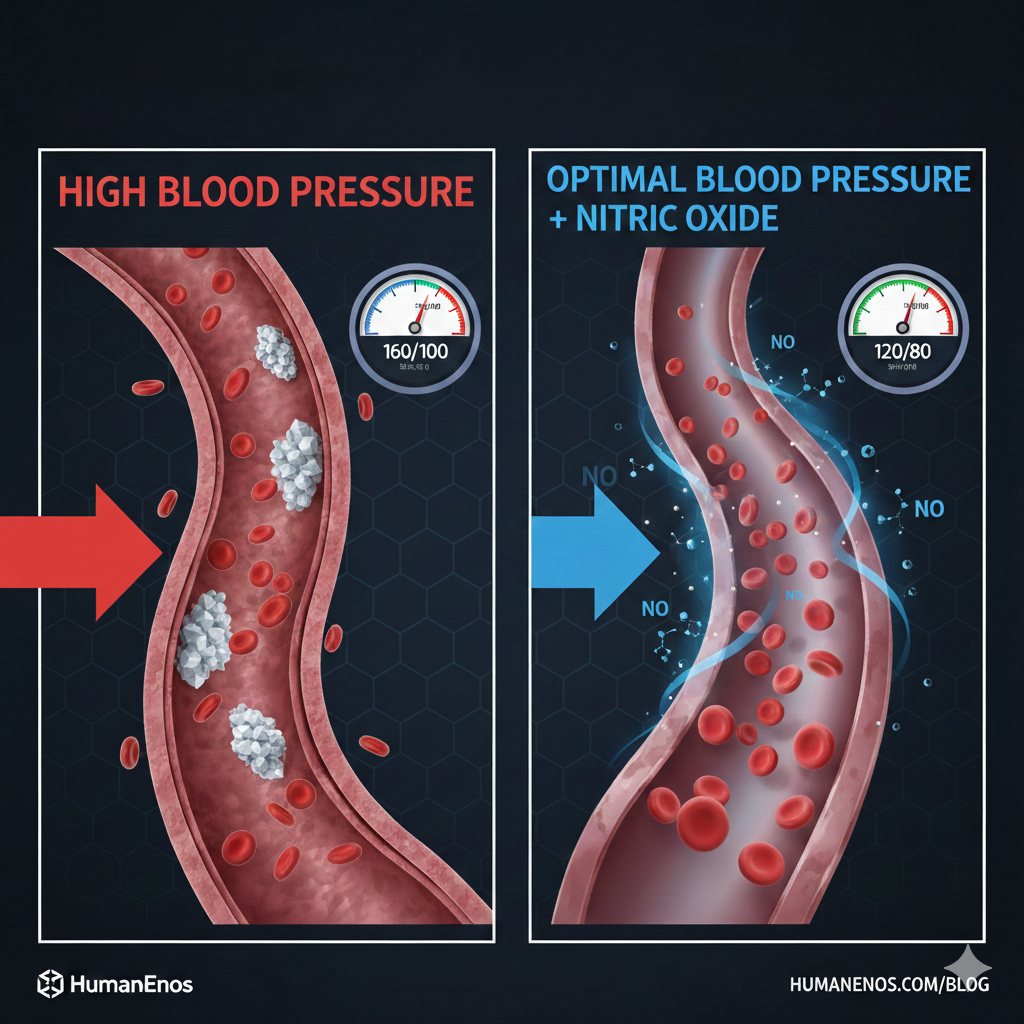
혈압은 결과이고, 산화질소는 그 과정을 조절하는 스위치에 가깝습니다.
약을 먹기 전이든, 약과 함께 관리하든, 중요한 것은 혈관이 스스로 조절할 수 있는 환경을 만들어주는 것입니다.
산화질소를 이해하는 순간, 혈압 관리는 단순한 숫자 싸움이 아니라 혈관 건강을 회복하는 과정이 됩니다.


HumanEnos Blog
That is why, before focusing on how much to lower blood pressure, it is essential to understand why it rises in the first place. At the center of this mechanism lies a key molecule: Nitric Oxide (NO).
Healthy blood vessels are naturally elastic, much like rubber bands.
They expand and contract as needed to regulate blood flow and pressure.
However, with aging, chronic inflammation, stress, and poor lifestyle habits,
the endothelial cells lining the blood vessels become damaged.
As a result:
This condition is known as vascular stiffness.
When blood vessels become narrow and rigid,
the heart must pump harder to push blood through,
leading to a natural rise in blood pressure.
Nitric oxide is considered a key factor in blood pressure regulation because it acts as a direct signaling molecule within blood vessels.
Vascular Smooth Muscle Relaxation
Nitric oxide signals the smooth muscle surrounding blood vessels to relax,
allowing the vessel lumen to widen.
As resistance decreases, blood pressure naturally falls.
Prevention of Blood Clots
Nitric oxide also helps prevent platelets from clumping together or sticking to vessel walls,
supporting smooth and healthy blood flow.
Rather than forcibly lowering blood pressure,
nitric oxide helps blood vessels regulate themselves naturally.
As we age or experience chronic stress,
the body’s ability to produce nitric oxide gradually declines.
This triggers a harmful cycle:
Over time, nitric oxide deficiency and hypertension reinforce each other, worsening vascular health.
Blood pressure is the result.
Nitric oxide is the switch that regulates the process.
Whether before starting medication or alongside it,
the key is supporting the body’s natural ability to regulate vascular tone.
Understanding nitric oxide transforms blood pressure management
from a battle against numbers
into a process of restoring vascular health.
We have compiled essential information about nitric oxide. Learn about nitric oxide for a healthy and happy daily life.

 Privacy Policy
HumanEnos Co., Ltd. (Agricultural Corporation) | CEO Cheon Hyeon-su
Business Address: 72 Wonam-ro, Soyang-myeon, Wanju-gun, Jeonbuk, South Korea
©2024 HumanEnos
휴먼에노스 블로그
因此,在关注“如何降低血压”之前, 更重要的是理解 血压为什么会升高。 而在这一机制的核心, 正是一种关键的信号分子——一氧化氮(Nitric Oxide, NO)。
健康的血管本应像橡皮筋一样富有弹性,
能够根据身体需要自由扩张和收缩。
但随着年龄增长、慢性炎症、压力累积以及不良生活习惯的影响,
覆盖在血管内侧的血管内皮细胞会逐渐受损。
结果是:
这种状态被称为 血管僵硬。
当血管变窄、变硬时,
心脏必须用更大的力量推动血液流动,
血压也就随之升高。
一氧化氮之所以在血压调节中至关重要,
是因为它直接参与 血管功能的信号传导。
放松血管平滑肌
一氧化氮可向血管周围的平滑肌发送信号,使其放松,
血管腔随之扩张,血流阻力降低,血压自然下降。
预防血栓形成
一氧化氮还能抑制血小板聚集,
防止其黏附在血管壁上,从而维持血液流动的顺畅。
它并不是“强行降压”,
而是帮助血管 恢复自我调节能力。
随着年龄增长或长期压力存在,
人体合成一氧化氮的能力会逐渐下降。
由此形成恶性循环:
久而久之,高血压与一氧化氮不足相互加重,
血管健康持续恶化。
血压是结果,
而一氧化氮是调节这一过程的 关键开关。
无论是在用药前,还是配合药物管理,
核心都在于帮助血管恢复自身的调节能力。
理解一氧化氮,
意味着血压管理不再只是控制数字,
而是走向 血管健康的根本改善。


